Exploring Antarctica, From Ice to Deep Earth
Compute Antarctic is a research group based at the University of Tasmania, investigating the processes shaping Antarctica’s ice sheets and the Earth beneath them.
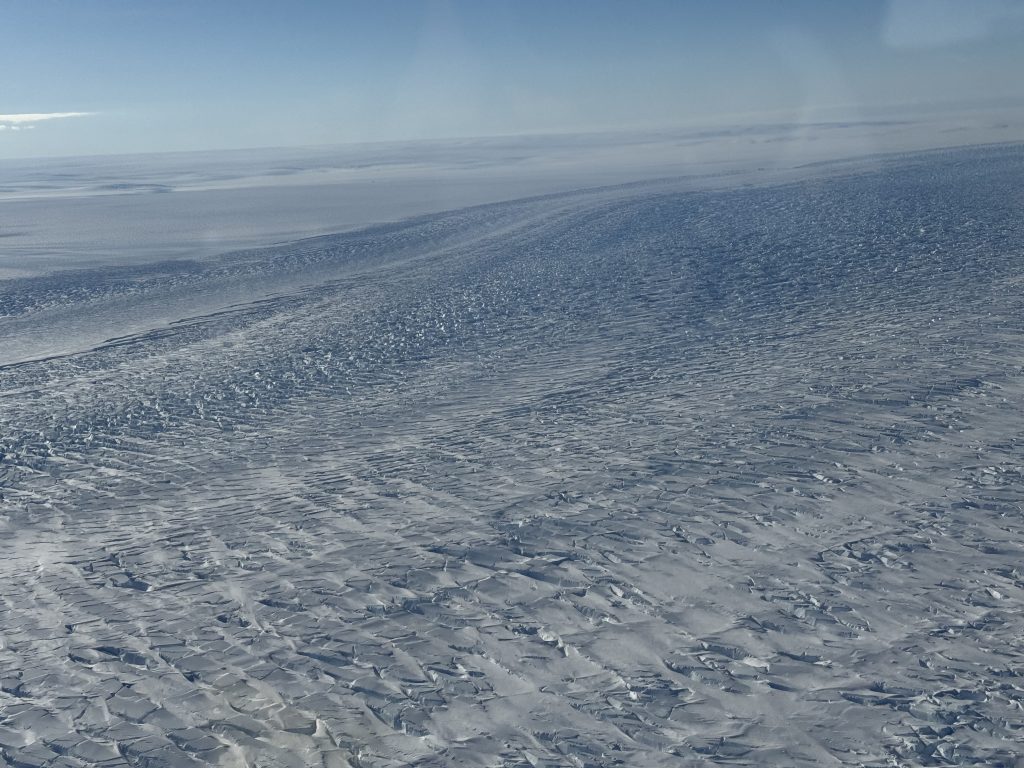
Combining field-based geophysical observations with advanced computational techniques, our research spans glacier dynamics, seismology, magnetotellurics and the interactions between ice and the solid Earth. Together, these approaches help us understand Antarctica’s hidden landscapes and their response to environmental change.
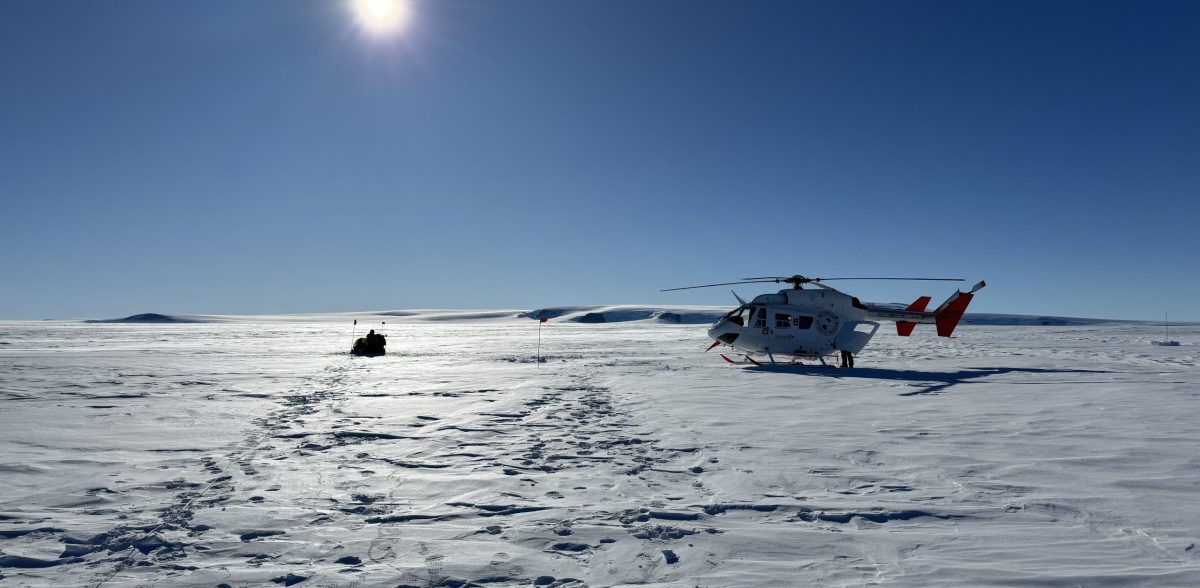
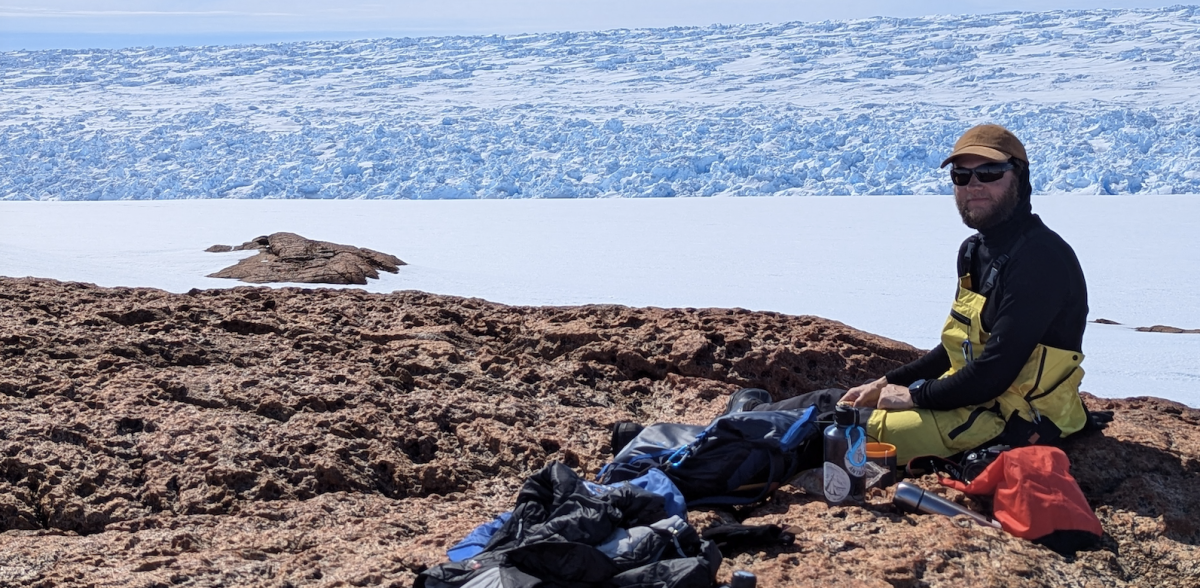 The Denman Glacier, East Antarctica, with Niam Askey-Doran (field geophysicist) in the foreground.

Collaborate With Us
We welcome opportunities to collaborate with researchers, institutions and organisations working across Antarctic science and related disciplines. Explore our research, meet our team or get in touch to discuss potential collaborations.
News

Sharing Earth Science Education at the Geoscience Forum
Dr Hannah Moore will present at the Tasmanian Geoscience Forum in Queenstown on Thursday 26 November 2026.
Read more
Her presentation, Inspiring the Next Generation of Earth Scientists, will explore the importance of Earth Science education and outreach in Tasmania, highlighting existing initiatives, opportunities for collaboration, and the need for greater investment in inspiring future geoscientists.
The presentation will also introduce Earth Science Tasmania, a new initiative aimed at connecting and strengthening the state’s Earth Science education and outreach community.
16th November 2026
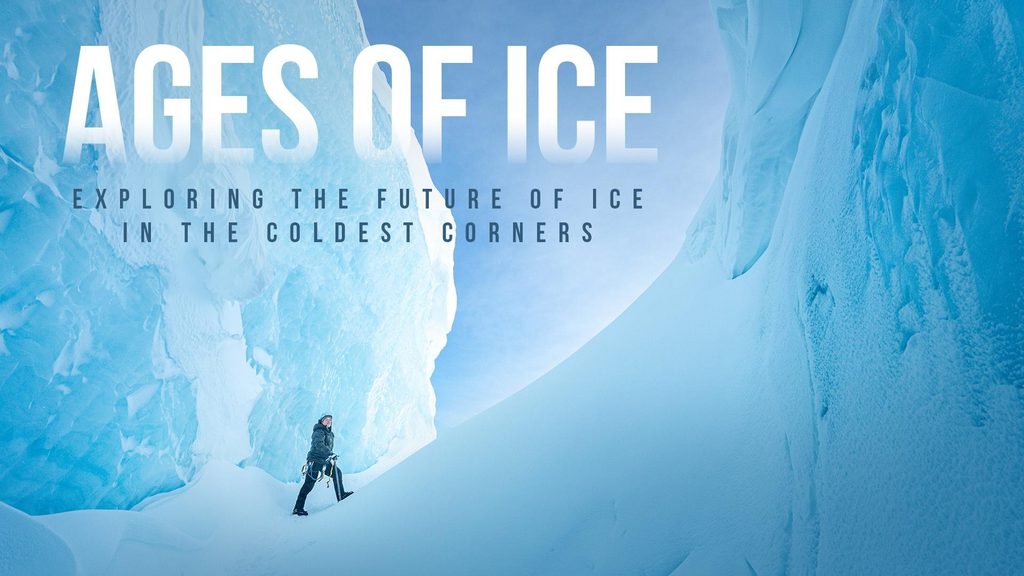
Dr Ian Kelly Features in ABC Documentary Ages of Ice
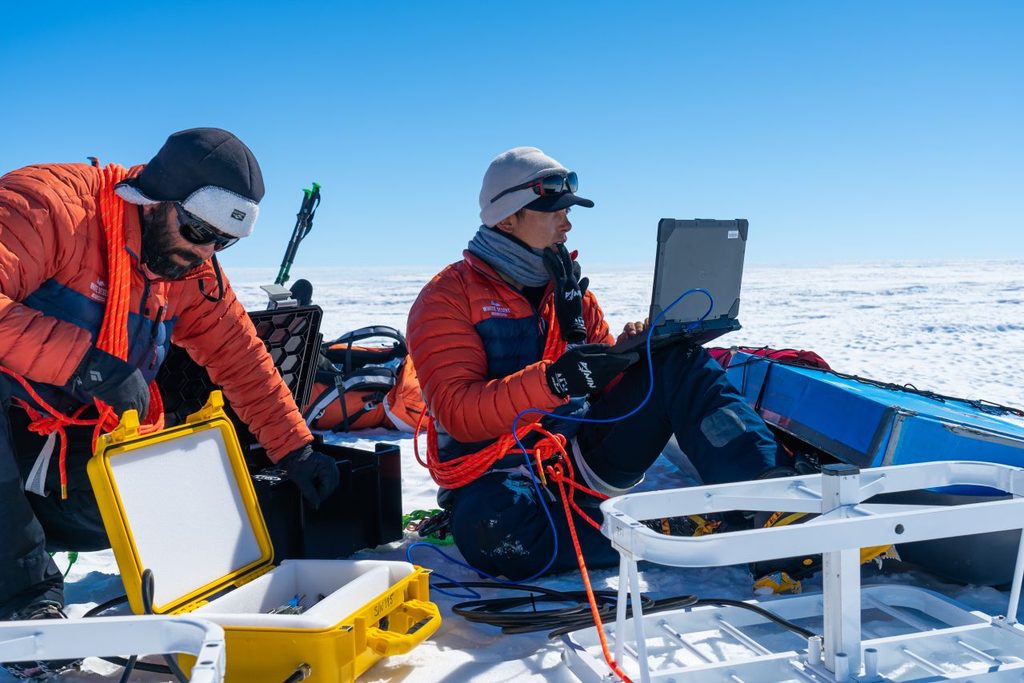
Our very own Ian Kelly is in the new ABC documentary Ages of Ice, narrated by David Tennant that explores Earth’s polar regions and climate science. Episode 1 was filmed during Ian’s 2024–2025 fieldwork in Dronning Maud Land, East Antarctica.
Dr Ian Kelly Discusses Antarctic Research on ABC Radio
Listen to Ian Kelly’s ABC radio interview discussing his work in polar research and the ABC docuseries Ages of Ice with Joel Rheinberger.
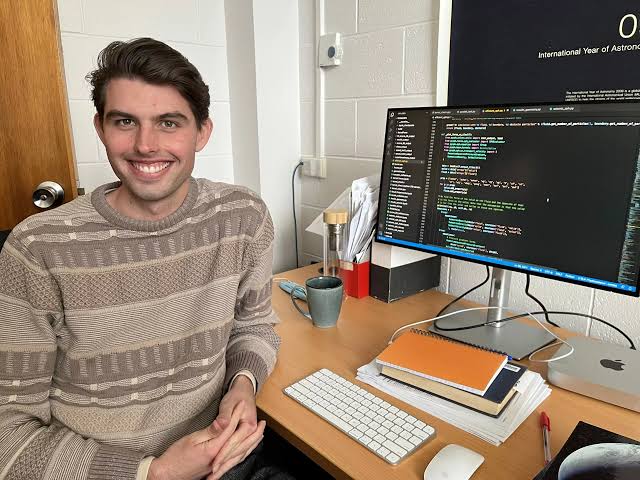
Congratulations to Dr Jared Magyar on the successful completion of his PhD
Jared’s PhD research involved the detection and characterisation of icequakes from seismic recordings. These icequakes, generated by processes such as fracturing and sliding, provide insights into the behaviour of Antarctic outlet glaciers and how they may be changing. Jared also developed machine learning methods for the automated classification of seismic signals to help understand large quantities of seismic data efficiently.
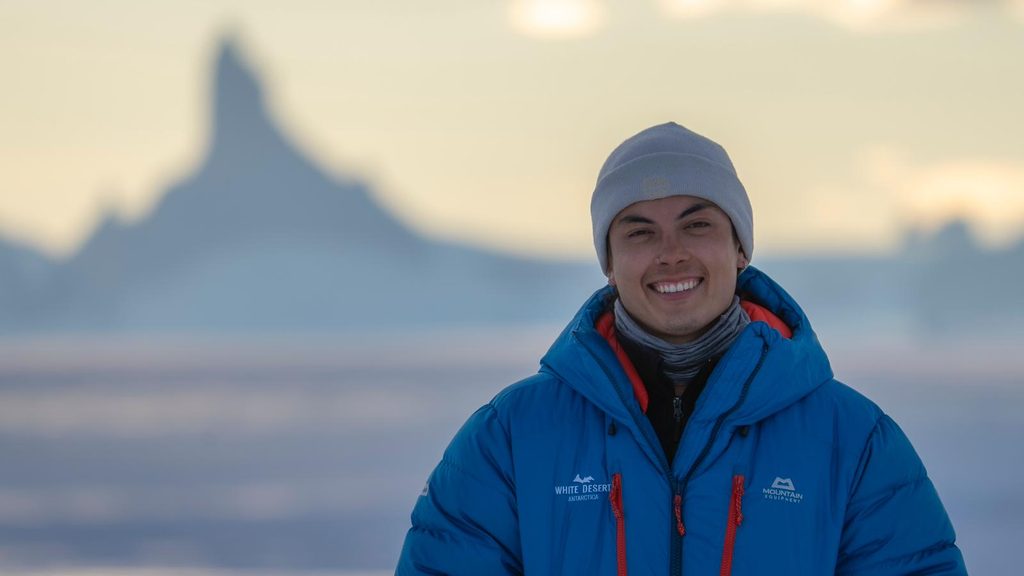
Congratulations to Dr Ian Kelly on the successful completion of his PhD
Ian developed passive seismic techniques to investigate the conditions beneath Antarctica’s ice sheets, improving our understanding of the ice–bedrock interface and its influence on ice-sheet behaviour.
Read more about Ian’s research
Ian’s PhD focused on developing the use of horizontal-to-vertical spectral ratios (HVSRs) of seismic ambient noise to investigate subglacial conditions. His work established the use of natural ground vibrations recorded at a single seismic station to characterise the ice–bedrock interface, supporting low-cost seismic deployments and helping constrain future ice-sheet modelling and sea-level projections.
Exploring Beneath Denman Glacier: Two Antarctic Field Seasons.
Dr Maria Constanza (Coti) Manassero and colleagues conducted geophysical investigations during the 2023–24 and 2024–25 Antarctic field seasons, exploring the bedrock topography and subglacial conditions beneath Denman Glacier. Their research is helping us better understand the processes influencing glacier behaviour and future sea-level change.
Read more about the compaign
- SBS News – The Antarctic mystery that threatens sea levels
- Sydney Morning Herald – The Antarctic glacier that could raise sea levels by 1.5 m
- Australian Centre for Excellence in Antarctic Science – Successful mooring deployment
- Australian Antarctic Program – Fishing for a glacier’s secrets
- Watch the video on YouTube
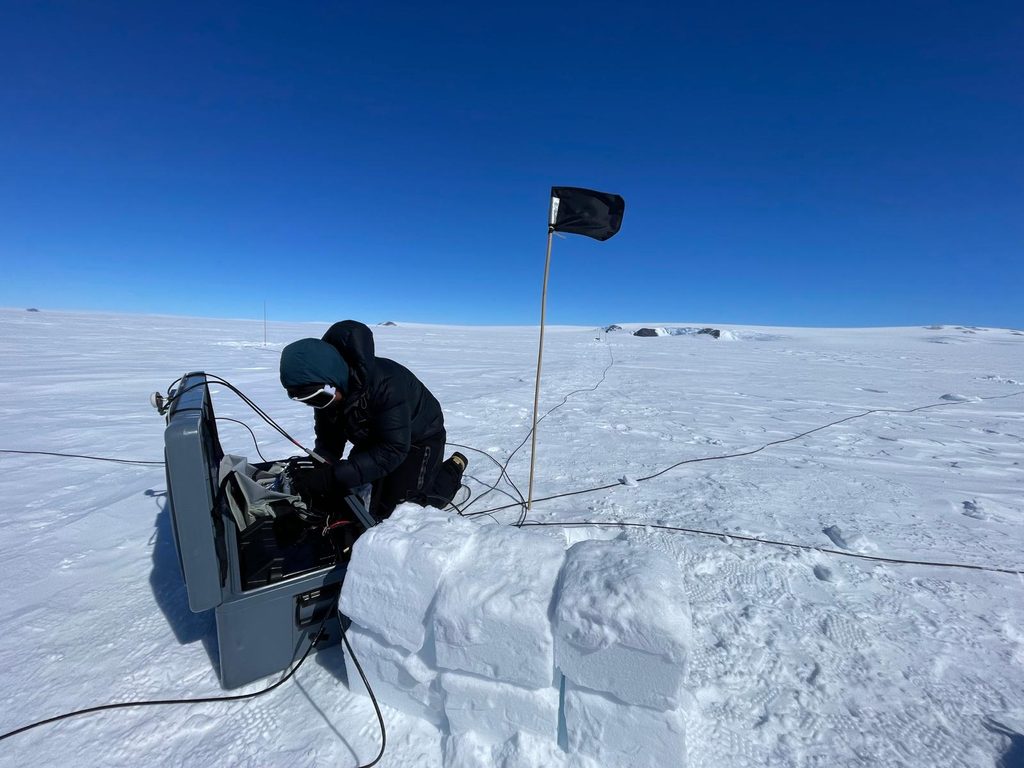
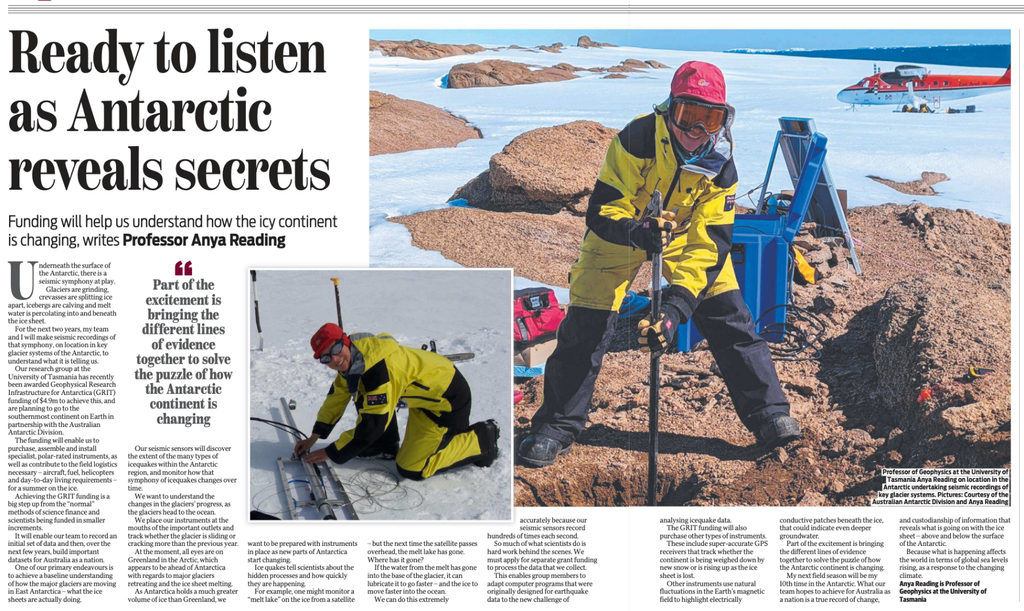
GRIT Antarctic research featured in The Mercury!
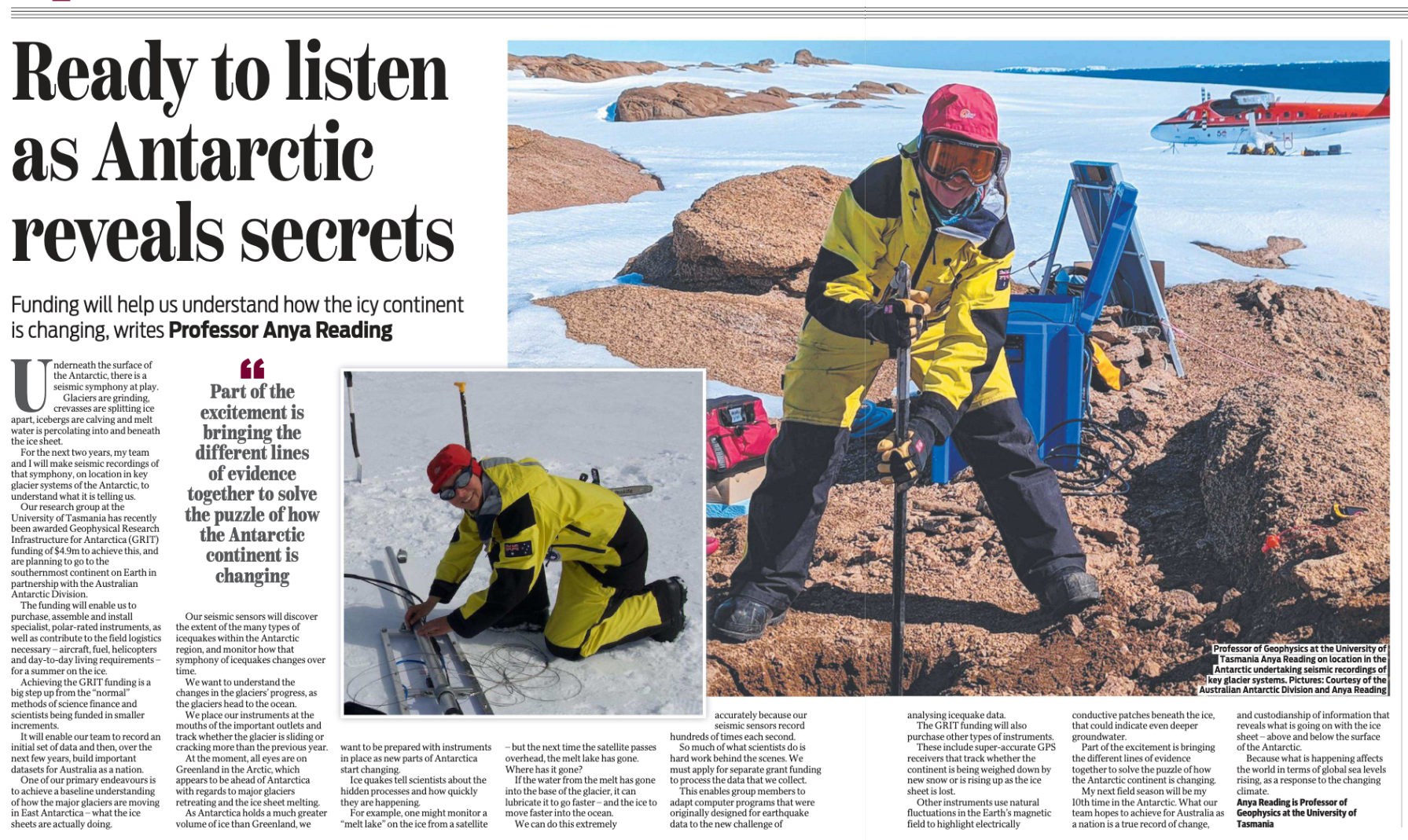
Professor Anya Reading was featured in The Mercury, highlighting new funding for the Geophysical Research Infrastructure for Antarctica (GRIT) Facility. The funding will support the deployment of specialised geophysical instruments to investigate Antarctica’s hidden landscapes, monitor glacier activity and improve our understanding of how the continent is responding to climate change. Read the article here.